The Art or Containment: Creating the Vessel for Change
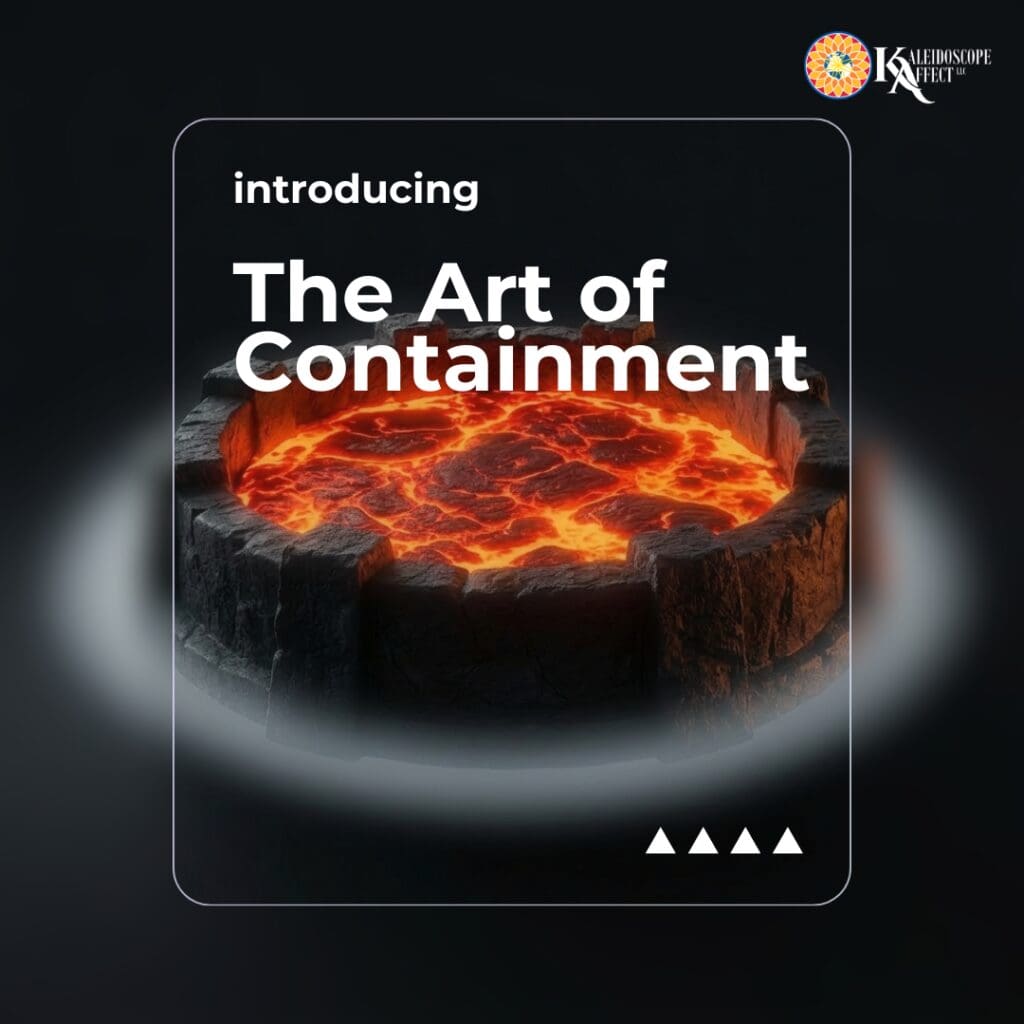
Movement without direction is just chaos. In the previous stage of our journey, we discussed the importance of Flow: the ability to move through uncertainty without becoming paralyzed by fear. But even the most powerful flow of energy eventually needs a container. Without boundaries, lava spreads too thin, loses its heat, and fails to create new ground. It simply dissipates.
In an organization, this is the stage of Containment.
Containment is the discipline of creating healthy guardrails. It is about protecting what matters and sustaining what is vital to prevent burnout. While many leaders view boundaries as restrictive, The Lava Way™ teaches that true power requires a vessel. If you want your organizational transformation to last, you must move from the fluidity of change into the solidification of systems.
The Problem: The Burnout of the Boundless
Many modern organizations suffer from a “leaky” system. They have high heat and great flow, but they have no way to contain that energy. This lack of structure leads to a specific type of systemic failure:
- Energy Diffusion: When priorities are not contained, everything becomes a priority. Teams find themselves pulled in a dozen directions at once, leading to mediocre results across the board.
- Chronic Burnout: Without clear boundaries between work and rest, or between different roles, the “fire” of the organization starts to consume its people instead of fueling its mission.
- Systemic Fragility: Processes that rely on the heroics of individuals rather than the strength of a system will eventually crumble under pressure.
Whether you are overseeing a medical facility or a creative agency, a lack of containment is expensive. According to research from Deloitte, nearly 77% of professionals say they have experienced burnout at their current job. This is not a failure of will; it is a failure of containment. The system has failed to protect its most valuable asset: its people.
Defining Containment: The Vessel of Transformation
Containment is not about control or micromanagement. It is about creating the discipline and structure necessary for long-term sustainability. It involves three critical shifts in organizational design.
- Establishing High-Integrity Boundaries
- In a clinical or corporate setting, boundaries are often viewed as “walls” that stop work. In The Lava Way™, boundaries are the “banks” of the river that keep the water moving fast and deep.
- We utilize the Presence Calibration Tool here to evaluate where our systems are leaking. Are we allowing “scope creep” to drain our resources? Are we letting communication channels stay open 24/7 without a break? By setting high-integrity boundaries, you ensure that the energy of your team is focused on the Next Wise Action rather than being scattered by distractions.
- Building “Burnout Buffers” into Systems
- Sustainability is not a personal responsibility; it is a system design. High-performing organizations do not wait for people to break before they offer support. They build “burnout buffers” directly into their operational flow.
- Data from the Future Forum Pulse indicates that employees with more flexibility and clearer boundaries around how and when they work report 40% less productive stress. When you contain the work within clear time and space constraints, the work actually becomes higher in quality.
- Transitioning from Heroics to Habits
- Early-stage transformation often requires the “heroics” of a few dedicated leaders. But heroics are not a sustainable business model. For a move to become a “solidification,” those heroics must be converted into habits and systems.
- This is where we apply Lava Lens thinking to our policies. We look at our facility norms and ask: “Does this process depend on one person staying late, or is it contained within a system that anyone can follow?” Solidification happens when the right way to work becomes the easiest way to work.
The Human Benefit: Safety Within the System
Psychological safety is a popular term in modern leadership, but it is impossible to achieve without containment. People feel safe when they know where the edges are. They feel safe when they know what is expected of them and what is off-limits.
When an organization masters Containment, the atmosphere changes from “high-anxiety” to “high-discipline.”
According to findings from the American Psychological Association, a staggering 95% of workers say it is important to work for an organization that respects the boundaries between work and non-work time.
Containment creates the safe container where innovation can happen without the fear of personal collapse.
The Impact on the Ecosystem
Containment creates a ripple effect that stabilizes every layer of the business.
- At the Individual Level: It promotes self-regulation. Individuals learn to contain their own “heat” so they don’t ignite their colleagues, and they learn to protect their own “flow” from constant interruptions.
- At the Team Level: It defines high-trust norms. The team agrees on how they wil communicate, how they will disagree, and how they will protect each other’s time.
- At the Cultural Level: It builds a legacy of stability. The organization becomes known as a place that is both high-performance and high-sustainability. It becomes a place where the ground is firm.
The Invitation to Solidify
As you reflect on your organization today, as yourself where the energy is leaking.
- Is your team exhausted because they are trying to do everything at once?
- Are your facilty’s “norms” actually just “unspoken pressures” that keep everyone on edge?
- Have you built a system that can survive without your constant intervention?
The Lava Way™ teaches that the most powerful fires are the ones that are held within a vessel. By creating structure, you are not stopping the movement; you are ensuring that the movement creates something that will last for generations.
Are you ready to build for the long haul?